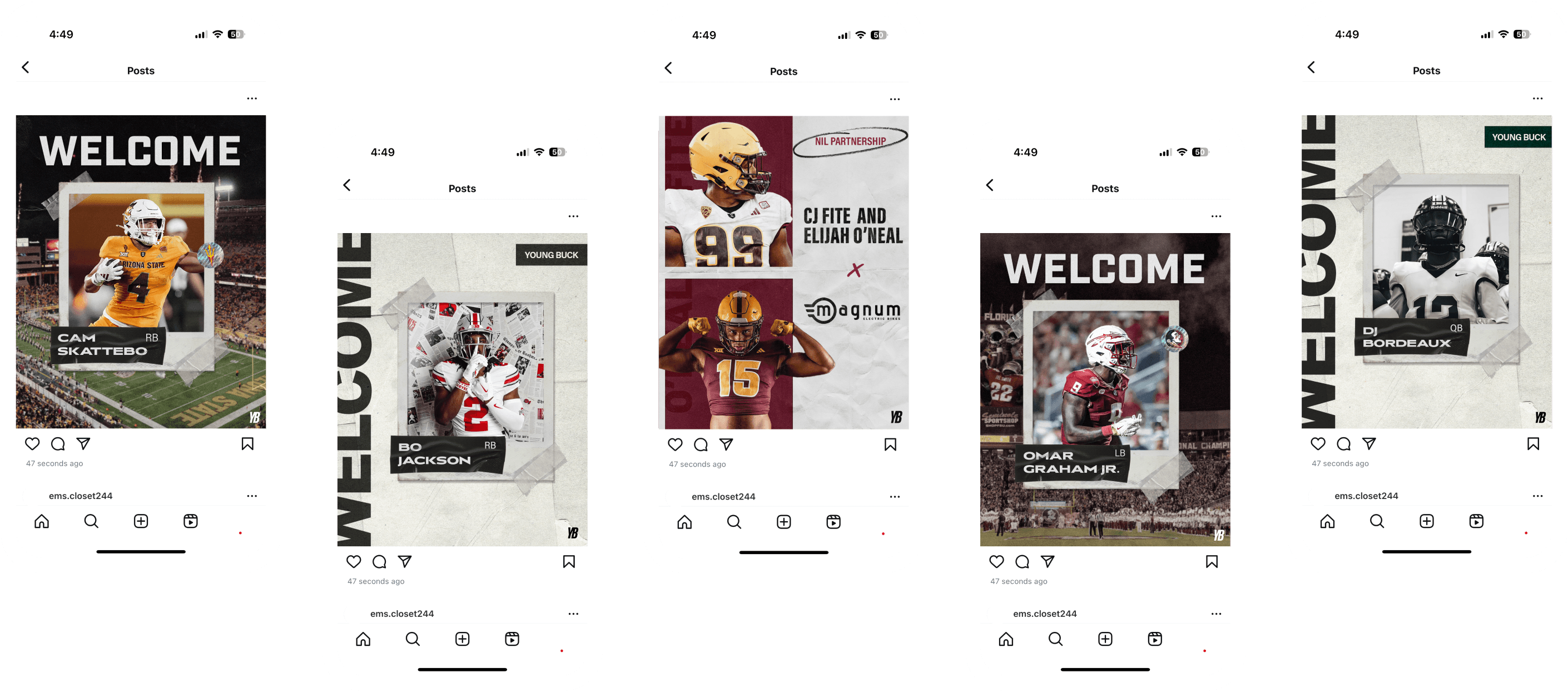
During my internship at Young Buck, an NIL agency, I helped build a scalable visual system for athletes, brands, and fans.
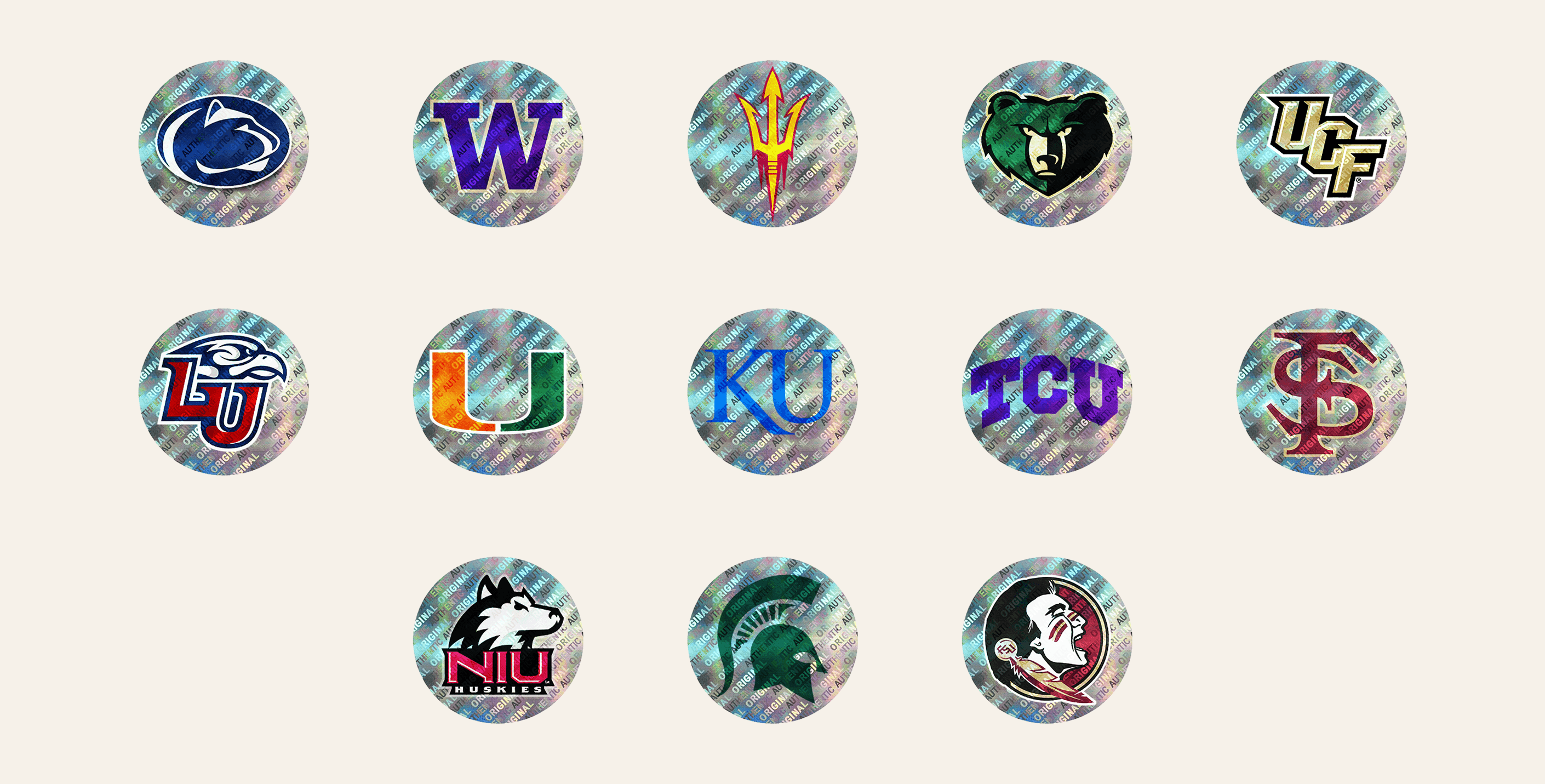
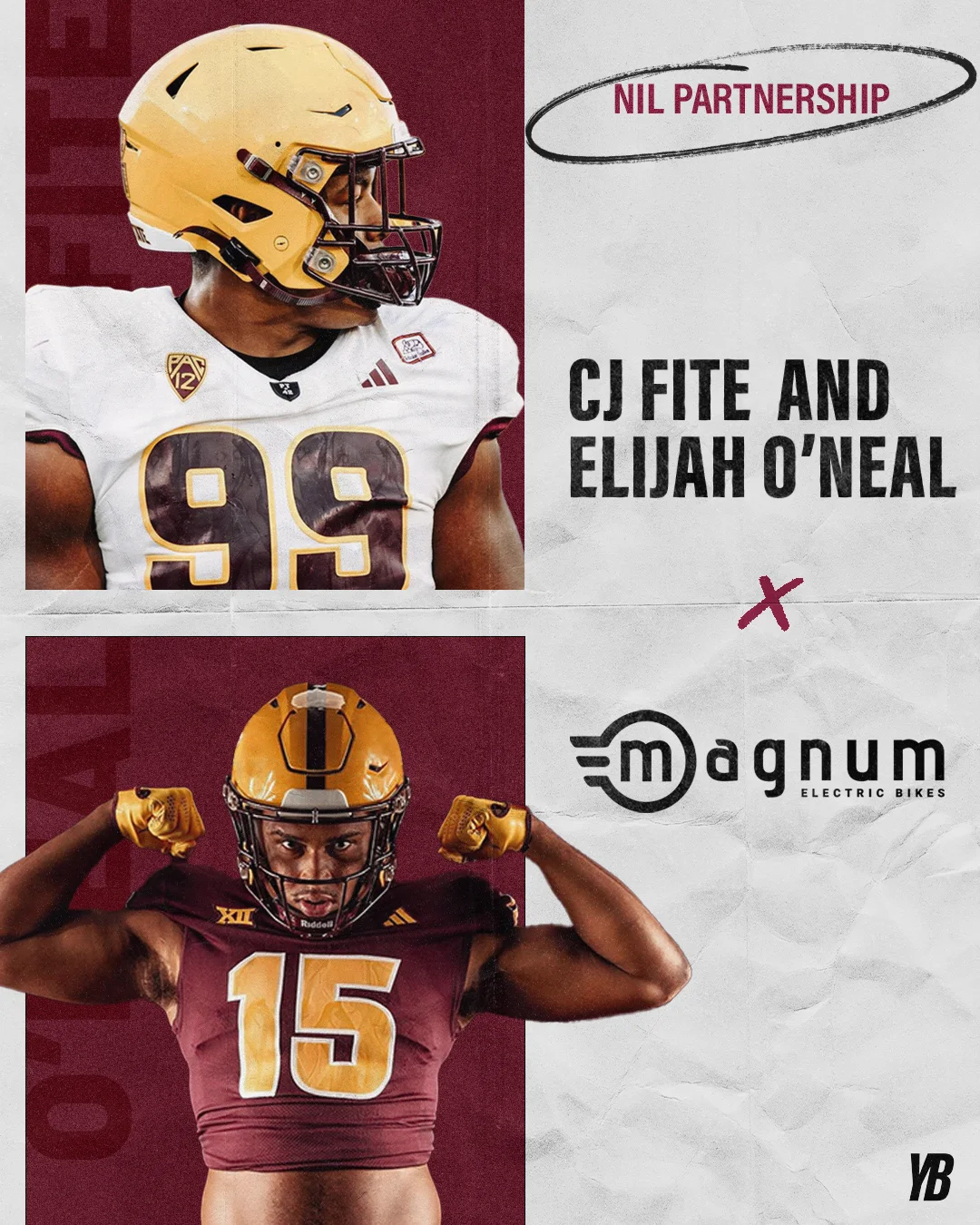
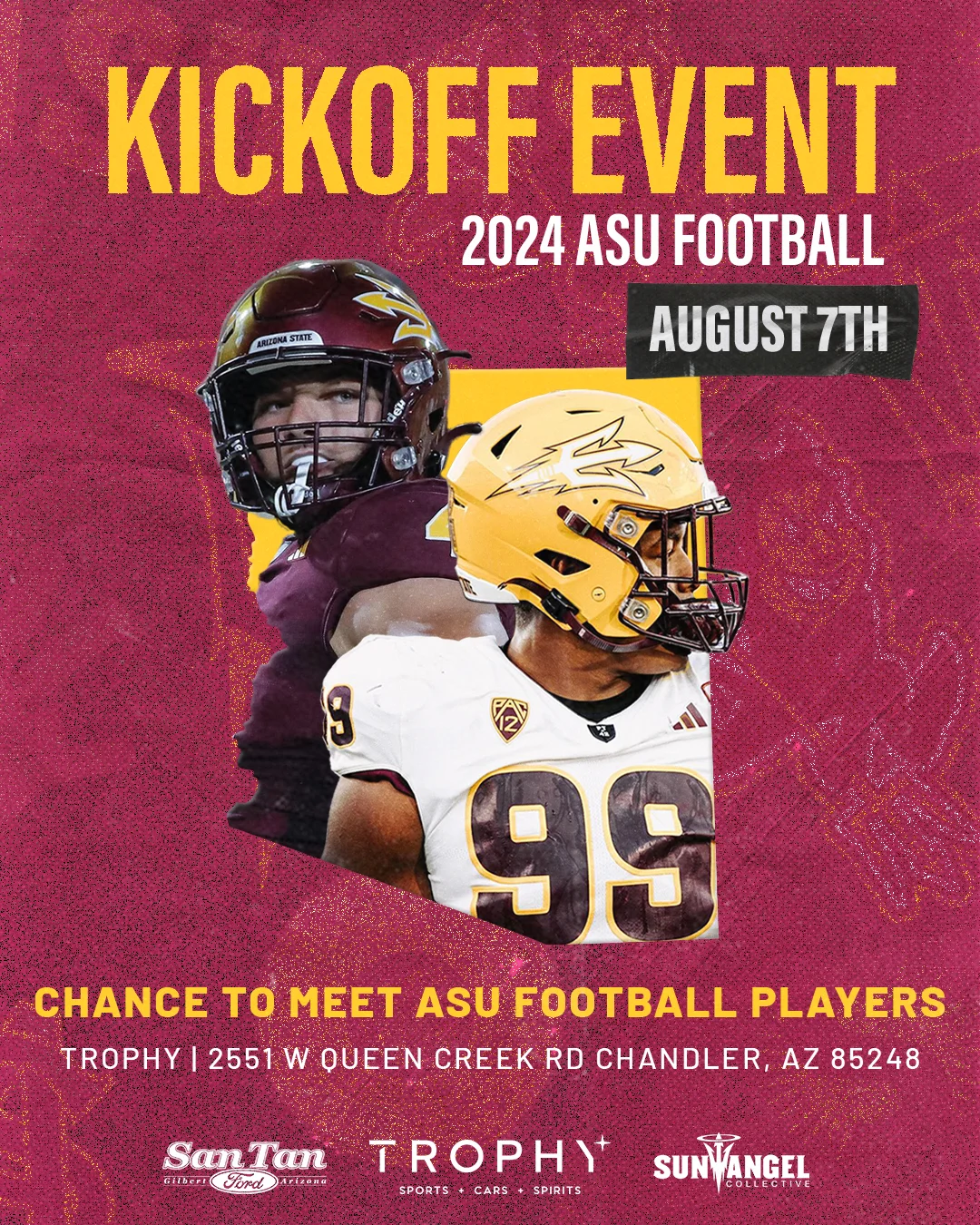
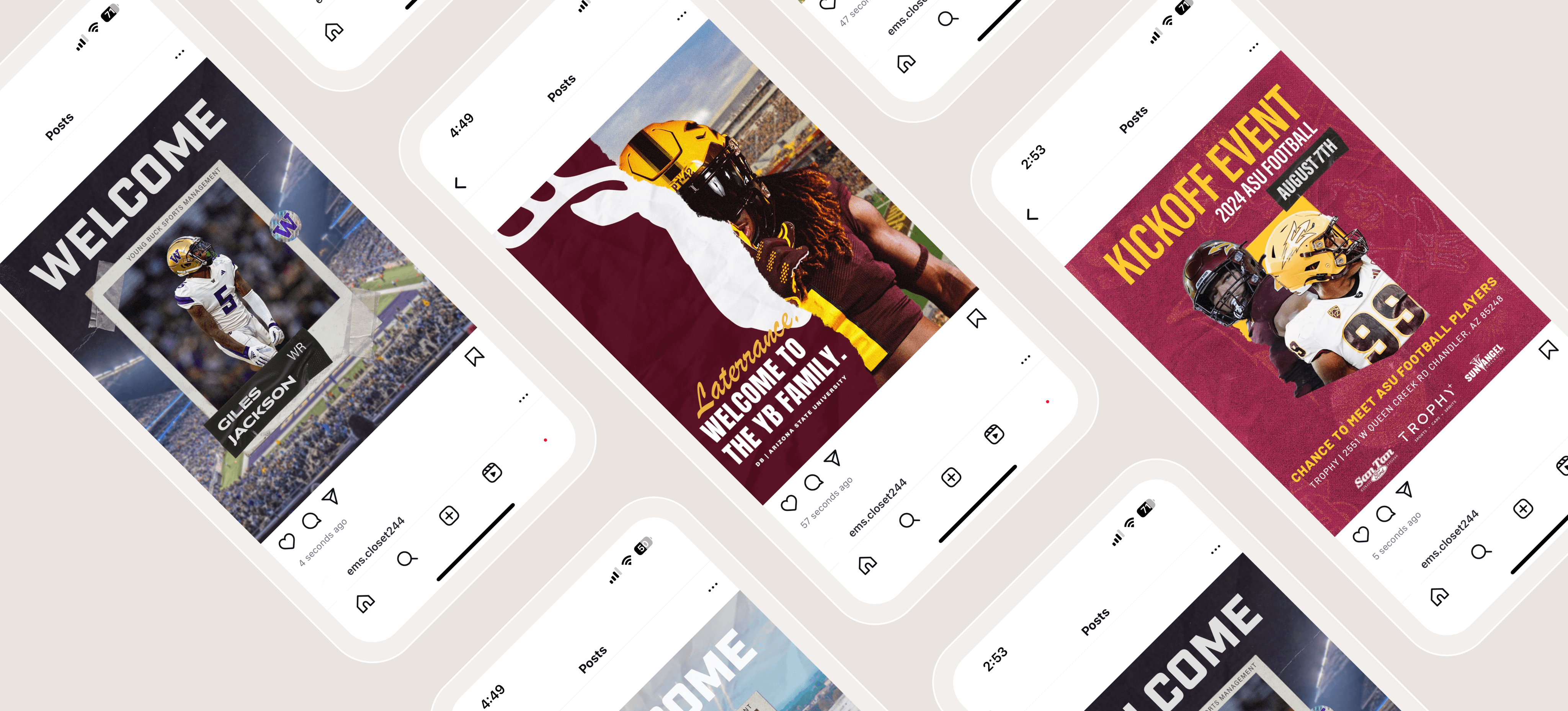
I created 27 social graphics, designed custom assets like holographic stickers, extended the website, optimized SEO with Google Analytics, and established reusable brand standards that could grow with the roster.
Role
Graphic and product designer
Tools
Photoshop, Illustrator, Wix, Google Analytics
Impact
Delivered athlete and partnership assets, built flexible templates, maintained the website, and improved online discoverability.
When I started at Young Buck, I had no prior graphic design experience. My main goal was to create a reusable “welcome” social graphic for new athletes.
I experimented with three directions, landed on the preferred concept, then evolved it through subtle tweaks over time.
Iteration 1
I experimented with three directions: Head-to-Head (bold and high-energy), Player Focus (clean and professional), and Polaroid Welcome (textured and editorial).
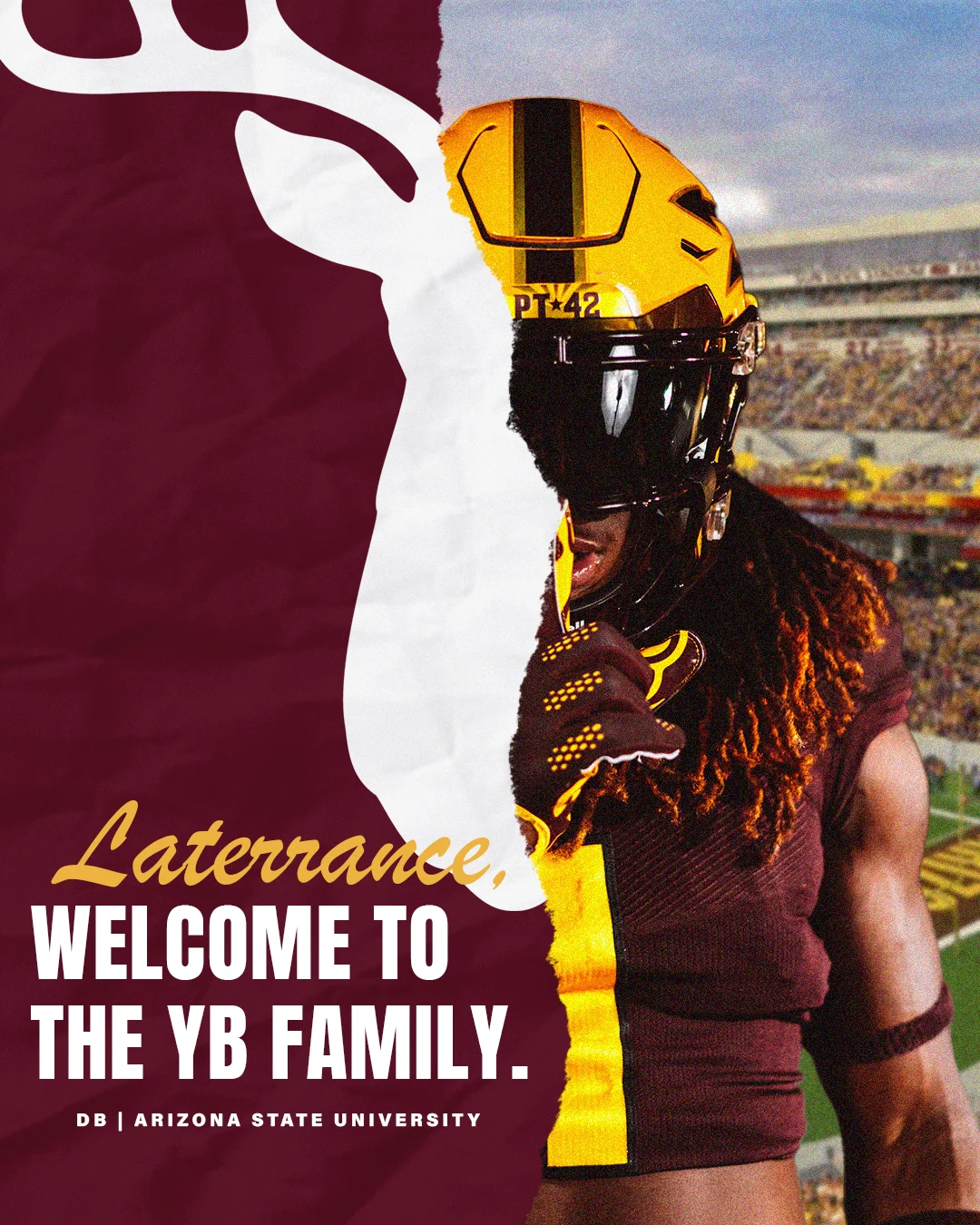
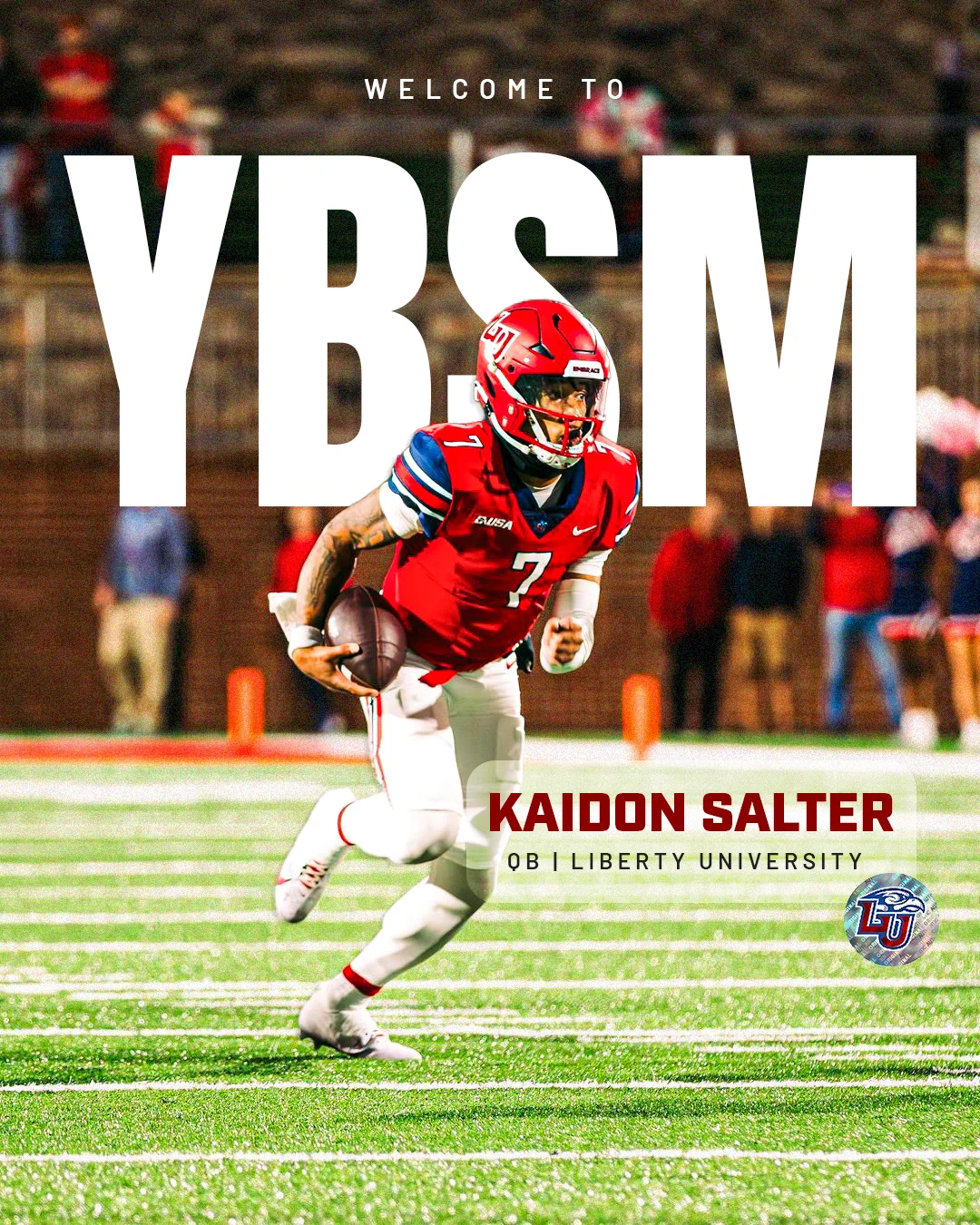
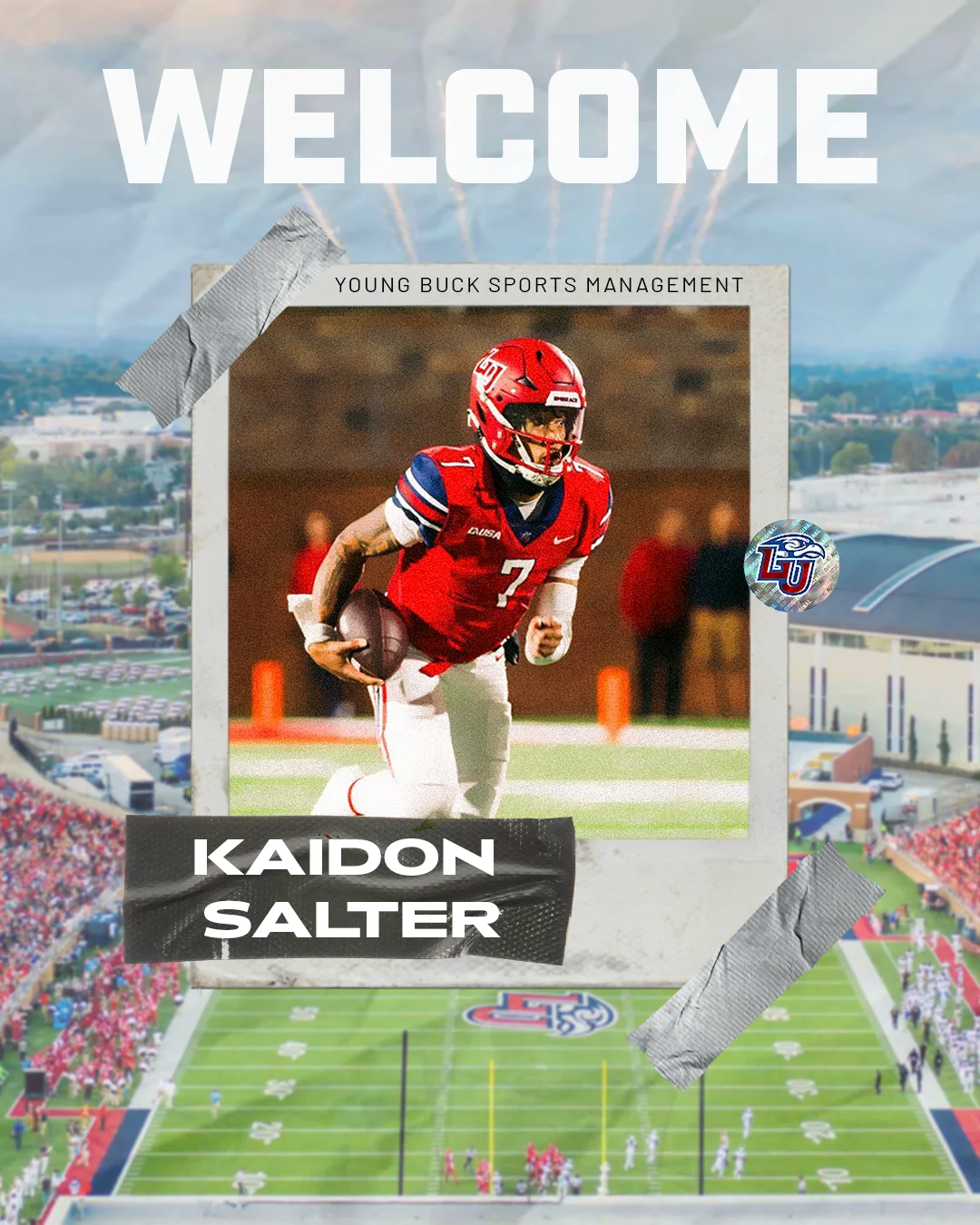
Iteration 2
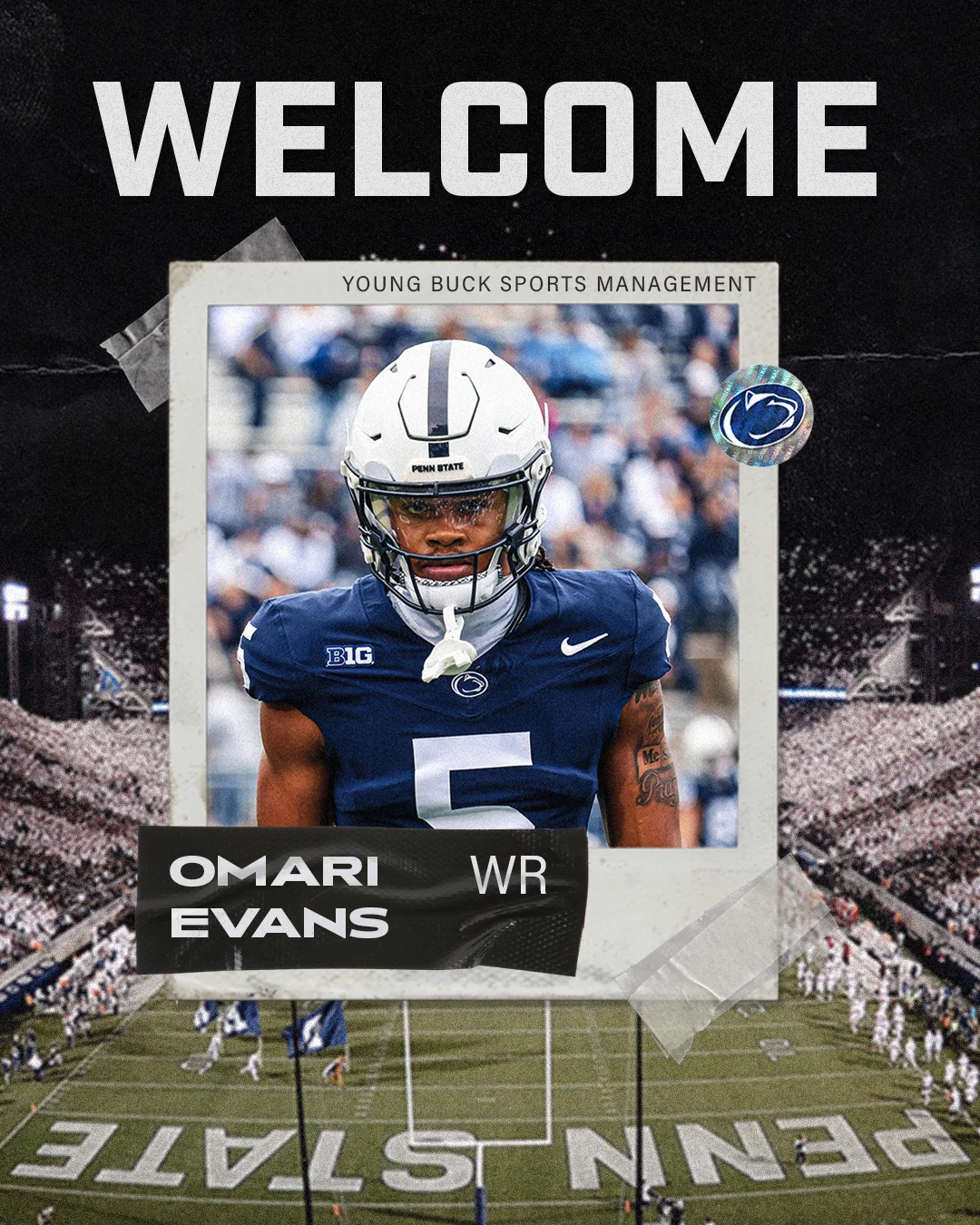
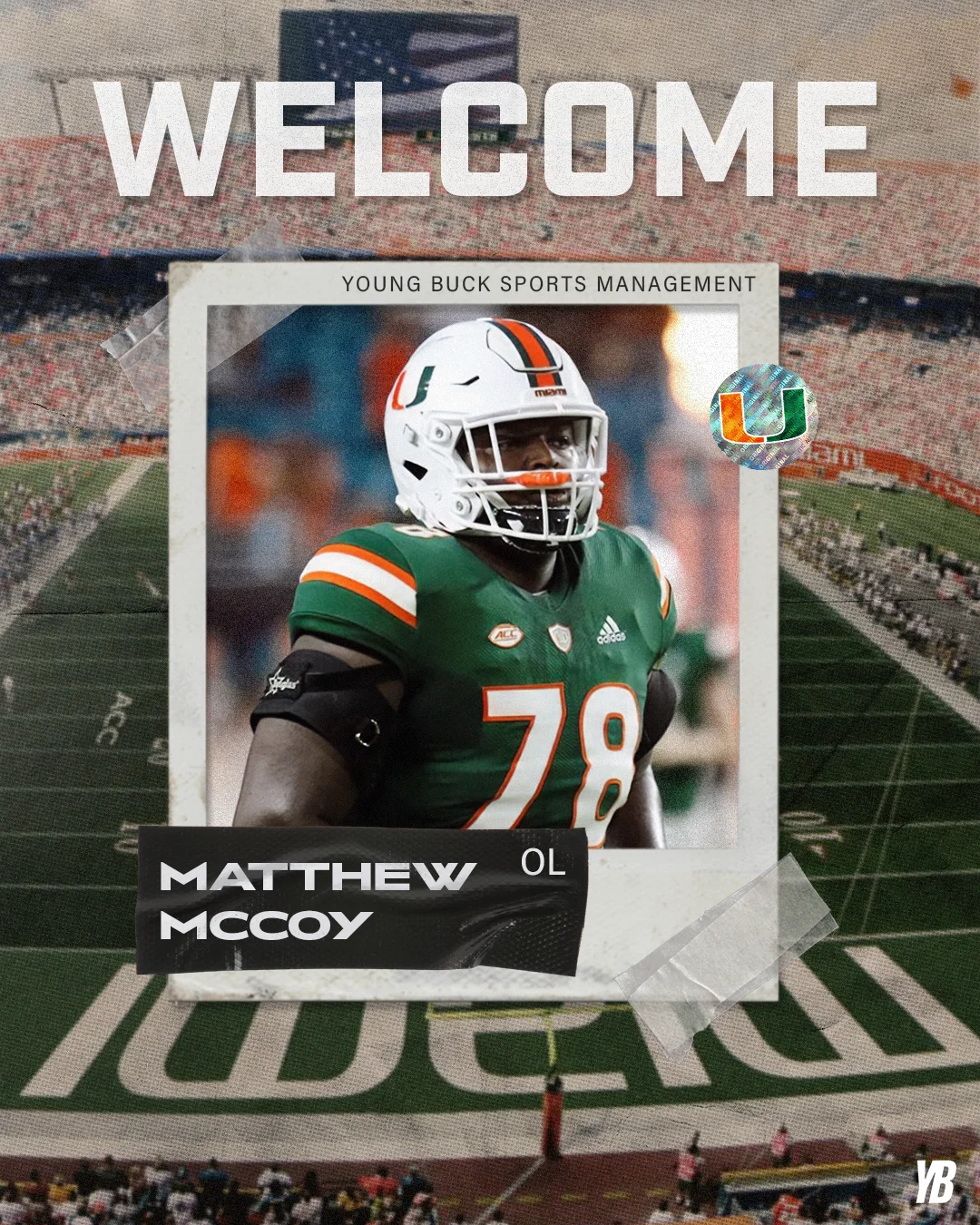
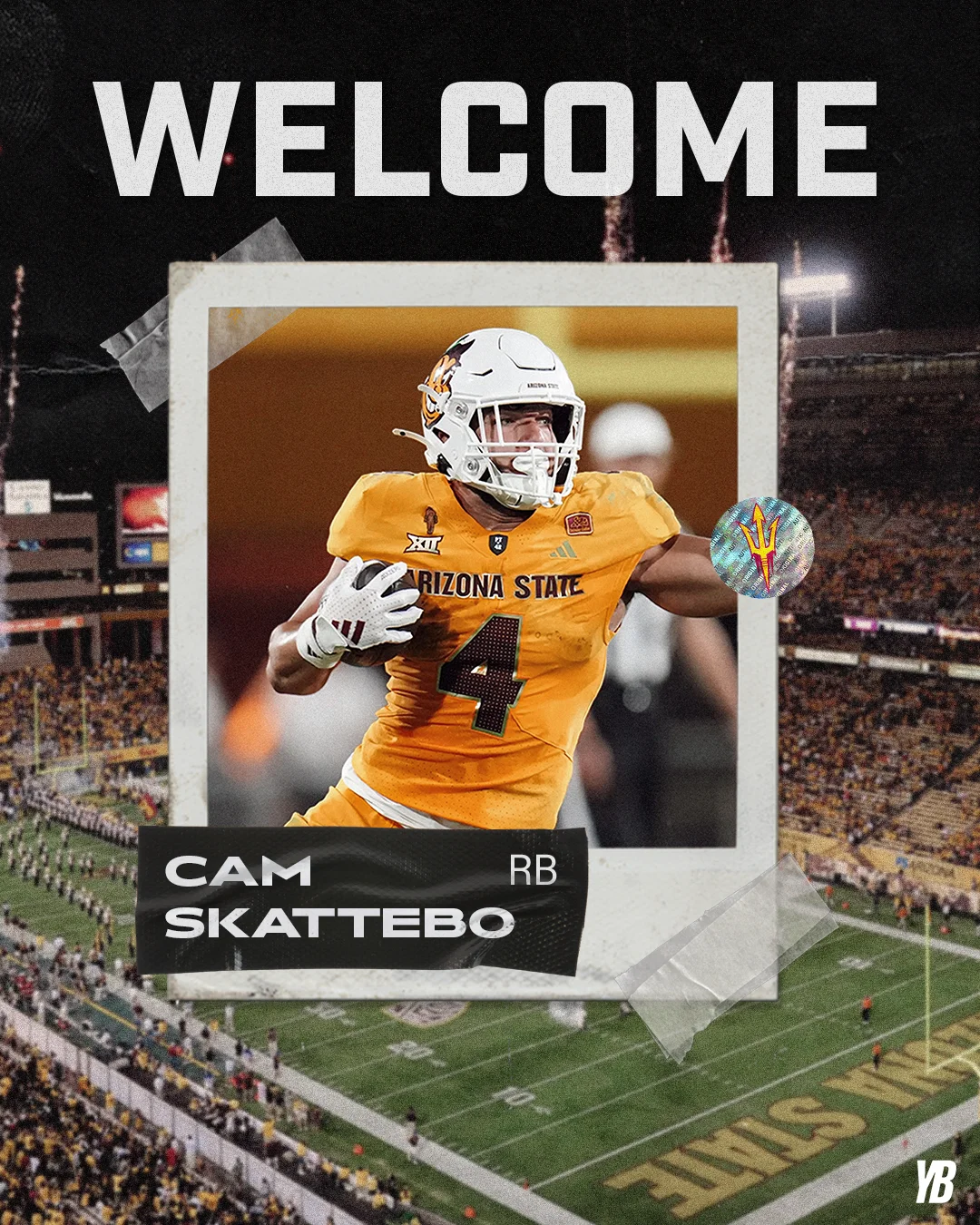
The Polaroid design grew from a scrapbook-style concept into a polished, professional template. I made subtle tweaks such as swapping opaque duct tape for translucent, adding the YB logo, cleaning up the card text, darkening and desaturating the background, and making the film grain consistent so the Polaroid became the undisputed focal point of every welcome post.

Iteration 3
My final design focused on minimalism, professionalism, and clarity. I switched to vertical typography and a neutral background to reduce distractions and make the Polaroid the main focus.
I also added “Young Buck” in the top right with the YB logo in the bottom corner as a subtle anchor.


I designed a custom sticker pack for each university to give the Polaroid welcome posts a premium, tactile feel. The holographic stickers add a collectible, sports-card quality, bridging digital graphics with physical memorabilia.